



- Maintain Control of Your Confidential Data. Monitor and regulate how employees transfer data to removable media such as USB drives, MP3 players, CDs, DVDs, and Bluetooth devices—even when not connected to the network.
- A Media Access Control (MAC) address is a unique numeric identifier used to distinguish a device from others on a network. The address is assigned by the manufacturer, for Ethernet and Wi-Fi cards. Your device therefore is likely to have two MAC addresses.
- A media access control address (MAC address) is a unique identifier assigned to a network interface controller (NIC) for use as a network address in communications within a network segment. This use is common in most IEEE 802 networking technologies, including Ethernet, Wi-Fi, and Bluetooth.Within the Open Systems Interconnection (OSI) network model, MAC addresses are used in the medium access.
- The wireless device control policy on Mac OS X will only affect Airport devices. Other wireless devices that are connected via USB or other connector that do not appear as an 'Airport' device in the Operating System are not covered. This may include, but not be limited to, USB Modems (3G Dongles), Bluetooth Modems, and Smartphone tethering.
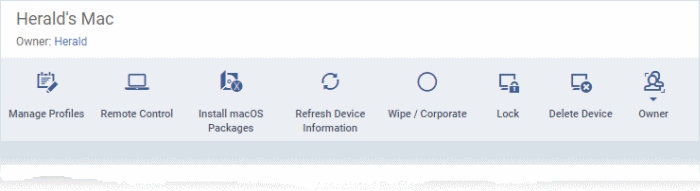
Remote Control Settings for Mac OS Profile page is a tutorial on how to configure Remote Control Settings for MAC OS. Click here to find out more detailed explanation.
Macs have been the outsiders in IT for a long time. For years, they have primarily been used in education and by marketing/creative folks for desktop publishing. So many IT departments didn’t need to manage Macs at all.
Over the last decade, Apple devices have experienced a huge resurgence. Macs aren’t just mainstream, they are, in fact, the platform of choice for many organizations and individuals. In some companies, Macs now far outnumber Windows devices.
But until recently, a true Mac device management and directory services solution has not been available for IT staff.
Traditional Mac Management: Leave it Up to Users
Unfortunately for IT, the management tools available for Macs have been lacking. Most organizations have left Macs largely untouched and unmanaged. The norm is often, “If an employee has a Mac, then they are responsible for managing it.”
This approach means Mac users are in charge of making sure that their device gets backed up, updated with the latest patches, and is encrypted – along with a host of additional management activities.
But users aren’t IT experts – and they’re often too busy with their daily work to make proper maintenance and security a priority. As a result, Macs can become a source of weakness in an organization’s security posture as well as a headache for IT admins who are constantly being asked to help resolve issues for machines that they can’t manage remotely.
Managing Macs with an Existing On-Prem Directory
Macs are often not connected to the corporate directory. Microsoft Active Directory has historically been the directory services solution of choice and managing Mac users on AD is an uphill battle. The integration between AD and Macs is lightweight and doesn’t allow for Mac device management.
So even though Macs have made tremendous inroads into commercial organizations, IT admins using a conventional directory such as Microsoft AD don’t have the capacity for true managment. The result is that they are struggling to control and manage their Mac devices.

Why Managing Macs Matters
Device Control Macbook
There are multiple benefits for organizations in managing their Mac users and devices.
Control Over Mac Users

Even if your organization leverages the cloud, confidential data inevitably makes it on to the device. If you don’t have control over the user accounts on the Mac, then you don’t have control of the device. Ensuring that you have admin credentials to the device and can terminate access if you need is imperative in managing the device.
More Efficient Troubleshooting
Just like for any other device, Mac users have issues that IT needs to solve, and remotely solving those issues is critical. These issues can include installing software, ensuring that backups are being done, and patches are installed. Macs also need to connect to the internal network and gain access to other IT resources. All of those issues need to be centrally managed rather than having the IT admin individually support Mac devices and users.
A True Mac Management Solution
As Macs become a greater percentage of the overall device population, it becomes more and more imperative to address the IT void in Mac management.
Much like Active Directory has enabled complete control over Windows devices, JumpCloud’s Directory-as-a-Service solution provide user authentication, authorization, and device management for Macs and their users. Macs are treated as first class citizens with full control over the ability to create, terminate, and modify user access.
Further, through JumpCloud’s command execution capabilities, IT admins can remotely execute tasks on an entire fleet of Macs. These tasks can include installing software, updating patches, ensuring backups are being done, encryption is turned on, and a variety of others. Commands can be simple or complex and written in just about any language. Execution of tasks is backed with full reporting and logging.
Mac Device Name
Manage Your Macs with Ease
Mac Control Panel
Macs are an important part of your infrastructure and your Mac users deserve the support that they need. JumpCloud’s Directory-as-a-Service is a comprehensive authentication, authorization, and management platform for Macs. Feel free to give JumpCloud a try – your first 10 users are free forever.